Taupō sits at the edge of New Zealand’s largest lake, ringed by volcanic peaks and threaded with geothermal energy, and that drama shows up in wedding photography in a way few other regions can match. Whether you’re drawn to misty lakefront mornings, the raw volcanic landscape of Tongariro, or the native bush lining the Waikato River corridor, Taupō offers genuine variety within a surprisingly compact area.
This guide covers the most photographed wedding locations in and around Taupō, what makes each one work visually, and the practical details your photographer will need to know before the big day.
Why Taupō Is a Popular Wedding Photography Destination
Taupō has long been a favourite for New Zealand couples, and it’s not hard to see why. The town sits roughly in the centre of the North Island, making it easily accessible from Auckland, Wellington, Hamilton, and the Bay of Plenty, which matters when you’re coordinating guests and vendors from across the country.
But it’s the landscape that keeps photographers coming back. Lake Taupō itself is enormous (616 square kilometres), it’s larger than Singapore, and that scale creates a sense of open sky and wide water that’s almost impossible to replicate anywhere else in New Zealand. Add the Volcanic Plateau to the south, the Waikato River tumbling out of the lake’s northern edge, and patches of native bush and farmland in between, and you have the kind of variety that lets couples build a full day of photography without driving more than an hour from the town centre.
The light here is also worth noting. The central plateau sits at around 360 metres above sea level, which gives Taupō a slightly different quality of light compared to coastal cities, cleaner and crisper on fine days, and dramatically moody when weather rolls in off the Volcanic Plateau.
The Best Outdoor Wedding Photo Locations in Taupō
Lake Taupō Foreshore
The foreshore is the first location most photographers think of in Taupō, and with good reason. The sheer scale of the lake makes for sweeping wide-angle portraits where the water seems to stretch to the horizon, with the Tongariro volcanic peaks visible on clear days to the south.
The area around the boat harbour and the Great Lake Walkway offers a variety of foregrounds, sandy stretches, rocky shoreline, old jetties, and stands of willows and native plantings. Early morning works particularly well, both for the quality of light and because foot traffic is minimal before 8am. Sunset shoots are equally popular, especially in summer when the sun drops behind the ranges to the west and throws warm orange light across the lake.
Access is straightforward, parking is plentiful, and no permit is required for photography on the public foreshore. It’s worth noting that the foreshore can be breezy, so lighter veils and dresses will need to be factored into the shot plan.
Lake Taupō with Mount Ruapehū and Mount Tongariro in the background
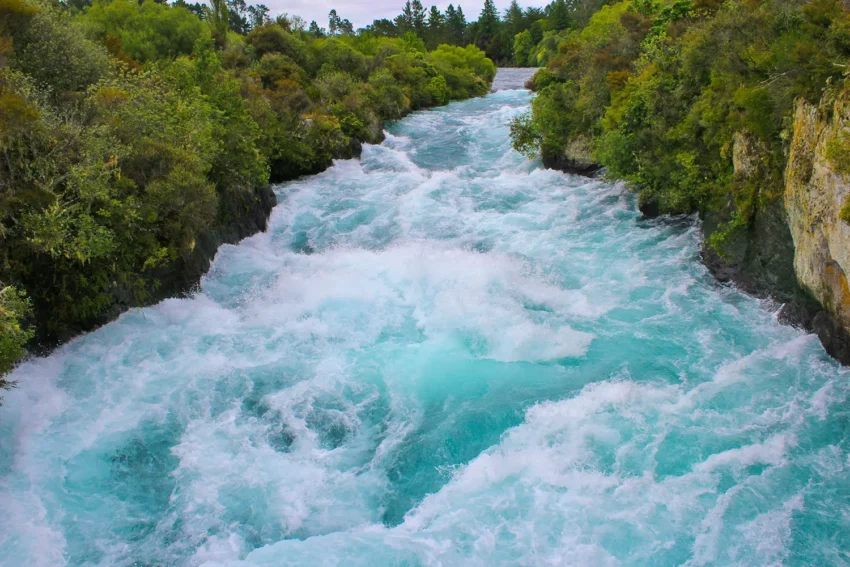
Huka Falls
Just 3 kilometres north of the town centre, Huka Falls is one of New Zealand’s most visited natural attractions, and one of the most striking photography locations in the region. The Waikato River compresses through a narrow gorge here and surges over the falls in an intense channel of electric-blue water, completely unlike the calm lake surface just upstream.
For wedding photography, Huka Falls offers texture and drama that contrasts beautifully with soft, romantic styling. The surrounding native bush provides a green canopy and dappled light, and the various viewing platforms and riverbank paths give photographers several angles to work with.
Mid-morning light reaches well into the gorge. The carpark is a short, flat walk from the falls. There is no entry fee. Commercial photography in the area falls under Waikato Regional Council and DOC jurisdiction depending on exact location, your photographer should check current requirements and confirm whether any permit or notification is needed for a commercial shoot.
Huka Falls, Taupō
Craters of the Moon Geothermal Park
For couples who want something genuinely different, the Craters of the Moon geothermal field on the northern edge of Taupō is one of the most unusual wedding photography settings in New Zealand. Steaming vents rise from rust-coloured and pale grey earth, with boardwalks winding through craters and fumaroles against an open sky backdrop.
The aesthetic is otherworldly! There is nowhere else in New Zealand that looks quite like this, and it works particularly well for editorial-style photography or couples who want their images to feel distinctive rather than conventional. In cooler months, the steam is more visible and the atmosphere more dramatic; in summer the site reads as more textural and alien.
Entry fees apply (around $10 per adult). The park is privately managed, and couples should confirm with the site operators that commercial photography is permitted under the standard entry terms. Your photographer may need to arrange this in advance.
The Wairakei Terraces and Geothermal Area
The broader Wairakei area north of Taupō offers several geothermally influenced landscapes, silica terraces, steaming pools, and carved pātaka (Māori storehouses) in a cultural and natural setting. The silica terraces, with their pale layered formations and vivid blue-green pools, are a striking backdrop that reads as distinctly New Zealand.
This area is managed as a tourist attraction with set entry fees and specific access arrangements. Contact the operators to discuss photography packages and any conditions that apply to wedding shoots on the premises.
Tongariro National Park
About 55 kilometres south of Taupō, Tongariro National Park is New Zealand’s oldest national park and a UNESCO dual World Heritage Site. For wedding photography, it represents the most dramatic option within reach of Taupō, the volcanic peaks of Ngāuruhoe, Tongariro, and Ruapehu rising above open tussock and lava fields create an epic backdrop that is unmistakably New Zealand.
The Whakapapa village area and the lower slopes of the mountain road offer accessible vantage points without requiring guests or couples to undertake serious hiking. On clear days, the mountain views here are extraordinary.
There are two important practical points. First, a Department of Conservation commercial photography permit is required for any professional photography on conservation land, which covers the national park. Your photographer must arrange this in advance; allow at least two to three weeks. Many photographers who regularly shoot in the region hold annual permits, so ask when you enquire. Second, add at least 35–40 minutes each way for travel from Taupō town, plus time for the shoot itself — this is realistically a half-day commitment if you want to do it properly.
Mountain weather can change rapidly, particularly in spring and autumn. Have a contingency plan and make sure your photographer is comfortable working in changeable conditions.
Waikato River Trails and Native Bush
For couples who want a softer, greener setting rather than volcanic drama, the Waikato River trails and surrounding bush areas offer lush native greenery, dappled light, and quiet paths away from crowds. The river corridor between the lake outlet and Huka Falls passes through a mix of native bush and open parkland, with the river itself providing a sense of movement and depth in wider shots.
This works well as a secondary location to complement a lakefront or geothermal shoot, or as a standalone setting for couples who prefer an intimate, woodland-style feel. Access is free and paths are well-maintained.
What to Tell Your Taupō Wedding Photographer
A few things that are specific to shooting in Taupō that are worth discussing when you make your enquiry:
Golden hour. Taupō sunsets can be spectacular, particularly when there’s atmospheric haze from the geothermal activity and the Volcanic Plateau. Ask your photographer whether they can schedule at least some portrait time around sunset, on a clear summer evening, the light over the lake in the last 30 minutes before sunset is exceptional.
Weather contingency. Taupō weather can shift quickly, particularly in spring. The plateau is exposed, and southerly fronts roll through with little warning. Before the wedding day, discuss with your photographer what the backup plan is if weather closes in, having a defined alternative location means you’re not making rushed decisions on the day.
DOC permits. If you want photos in Tongariro National Park or on any other conservation land, your photographer needs a commercial use permit from the Department of Conservation. This is the photographer’s responsibility to organise, but you should raise it early. Some photographers already hold annual permits; others will need to apply specifically for your date. Give yourself at least three weeks.
Travel fees. Photographers based in Taupō typically include locations within a 20-kilometre radius in their base package. Tongariro, 55 km (34 miles) south and Kinloch Lodge (accessed by boat or longer road) will usually attract a travel surcharge or be structured as a half-day add-on. Clarify this when you get a quote so there are no surprises.
Permits for popular public spots. Huka Falls and the foreshore are high-traffic tourist locations. Your photographer will need to work efficiently and may need to manage bystanders in the frame. Early morning or late afternoon sessions reduce this significantly.
Do I need a permit to have professional wedding photos taken at Huka Falls?
The Huka Falls area falls under a mix of jurisdictions, some paths and viewpoints are on land managed by Waikato Regional Council, others by the Department of Conservation. For personal photography there is no issue, but a professional wedding shoot is considered a commercial activity, which may require notification or a permit depending on the exact location. The most straightforward approach is to ask your photographer directly, a good Taupō-based photographer will already know the current requirements for each specific spot.
What time of year is best for wedding photography in Taupō?
Late summer (February to March) offers the most reliable weather and the warmest tones on the lake. Autumn (April and May) is a favourite with photographers for its golden light, misty mornings, and the fact that crowds thin out considerably. Winter produces dramatic, moody images and snow on the mountains in the background, but weather is less predictable and golden hour falls much earlier. Spring can be beautiful but is the most changeable season — plan for a weather contingency if you’re marrying in October or November.
How far in advance should I book a Taupō wedding photographer?
For summer weekends, particularly in January through March, 12 to 18 months in advance is common for photographers whose style and work are in demand. Midweek bookings, winter dates, or smaller elopement-style shoots may have more availability at six to nine months. If you have your heart set on a specific photographer, reach out as soon as your date is confirmed.
Can we take wedding photos inside Tongariro National Park?
Yes, with the appropriate DOC commercial photography permit. The permit covers your photographer operating commercially on conservation land. It is straightforward to obtain but must be arranged in advance, allow at least two to three weeks. Your photographer is responsible for holding the permit; when you enquire, simply ask whether they have a current annual permit or whether they’ll need to apply for your date.
Is there parking at the main photography locations around Taupō?
Yes, the main foreshore areas, Huka Falls carpark, and Craters of the Moon all have good public parking. For early morning shoots, you’ll generally have no trouble. For afternoon and evening shoots during peak summer, the Huka Falls carpark in particular can get busy, and your photographer may want to factor in a short walk from an overflow area. Tongariro has carparks at Whakapapa Village, but in peak season (particularly school holidays) these fill early.
What’s the difference between a Taupō photographer and hiring someone from Auckland or Wellington?
Photographers who are based in or regularly work in Taupō will know the specific light conditions, permit requirements, seasonal quirks, and logistics of the locations far better than someone travelling from outside the region. They’re also more likely to have relationships with local venues and suppliers. That said, some couples choose a photographer from their home city whose style they love and accept the associated travel costs, both approaches can work well.
 Taupō sits at the edge of New Zealand’s largest lake, ringed by volcanic peaks and threaded with geothermal energy, and that drama shows up in wedding photography in a way few other regions can match. Whether you’re drawn to misty lakefront mornings, the raw volcanic landscape of Tongariro, or the native bush lining the Waikato River corridor, Taupō offers genuine variety within a surprisingly compact area.
This guide covers the most photographed wedding locations in and around Taupō, what makes each one work visually, and the practical details your photographer will need to know before the big day.
Taupō sits at the edge of New Zealand’s largest lake, ringed by volcanic peaks and threaded with geothermal energy, and that drama shows up in wedding photography in a way few other regions can match. Whether you’re drawn to misty lakefront mornings, the raw volcanic landscape of Tongariro, or the native bush lining the Waikato River corridor, Taupō offers genuine variety within a surprisingly compact area.
This guide covers the most photographed wedding locations in and around Taupō, what makes each one work visually, and the practical details your photographer will need to know before the big day.



Leave a Reply
You must be logged in to post a comment.